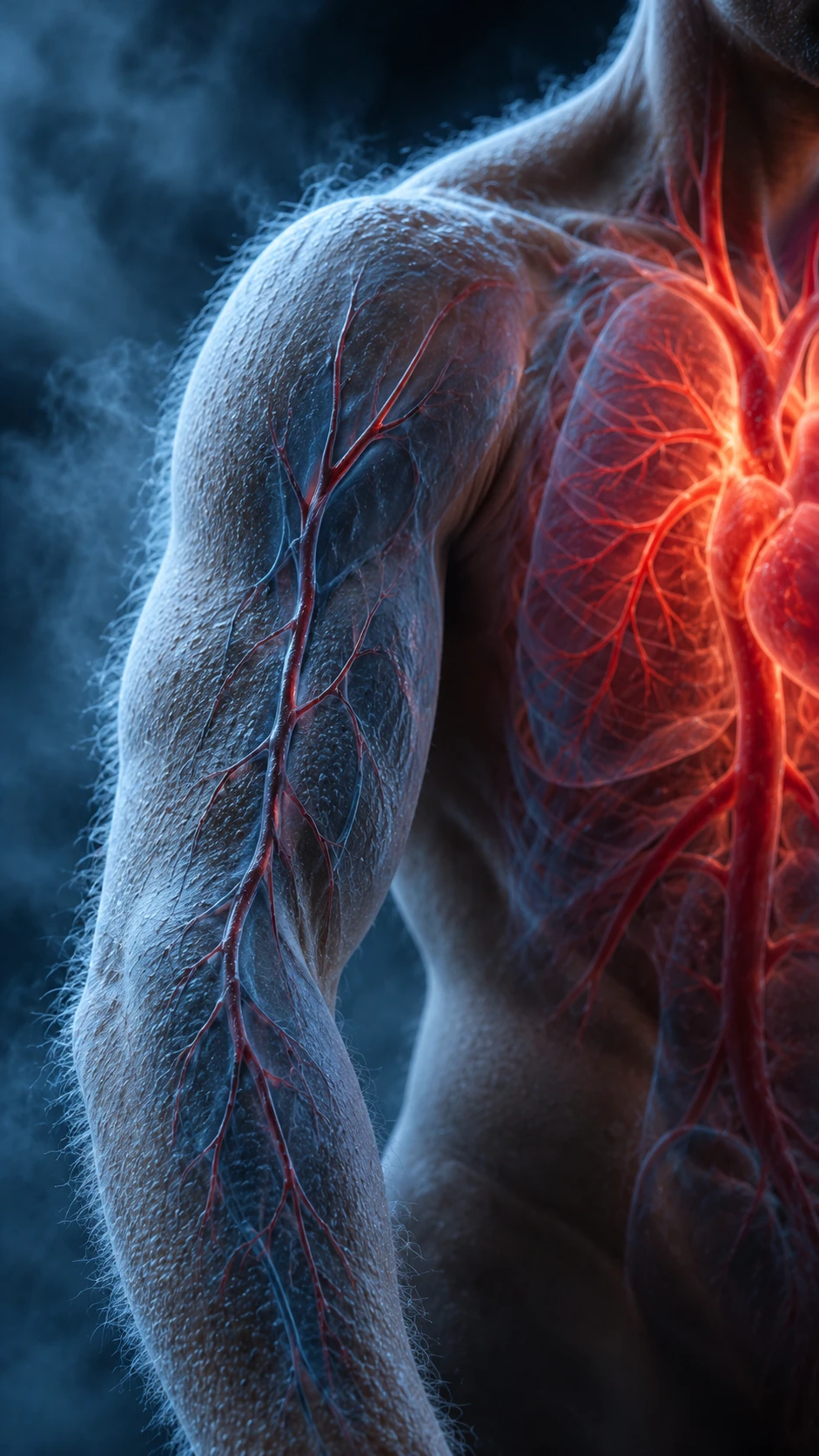
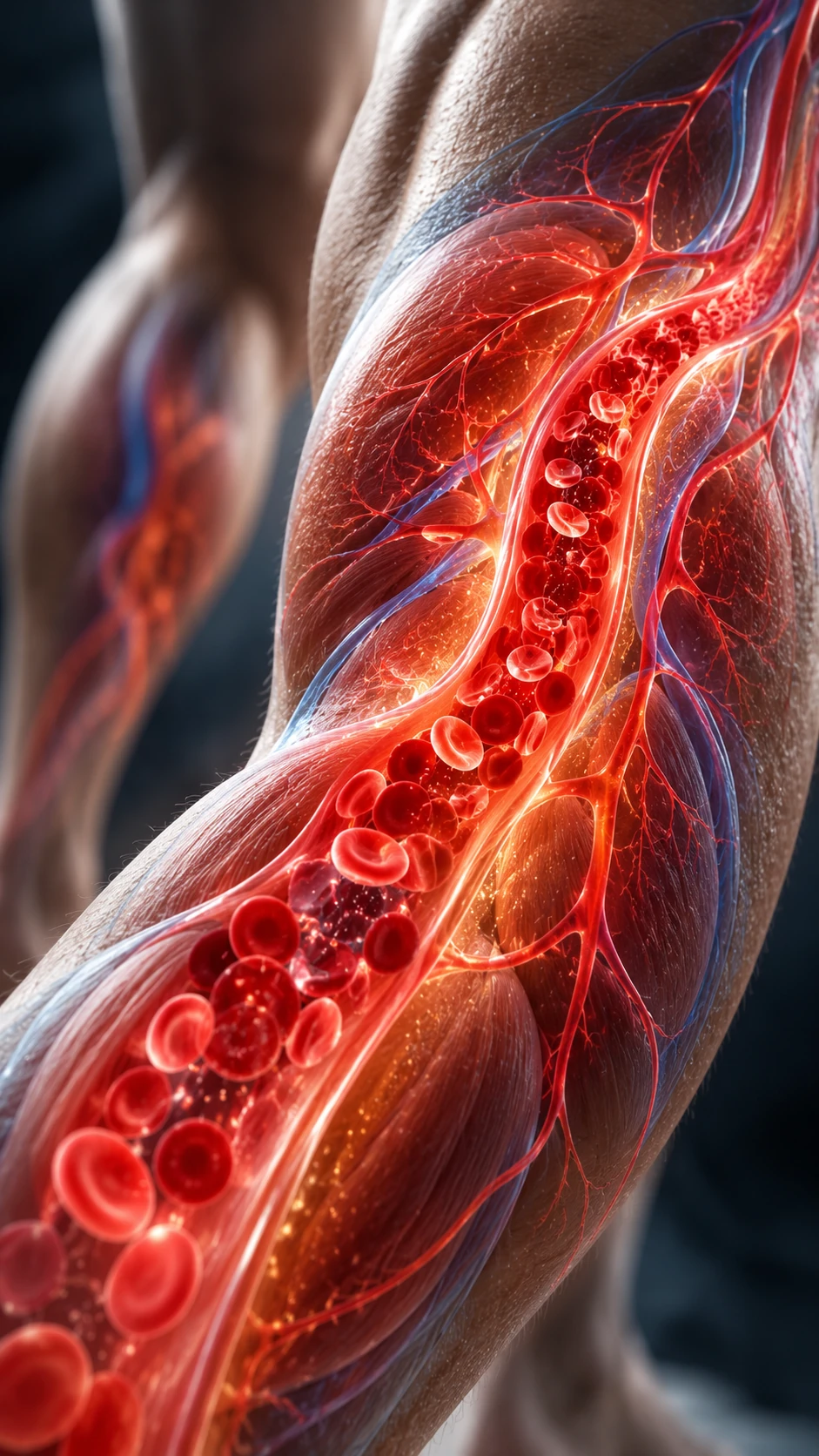
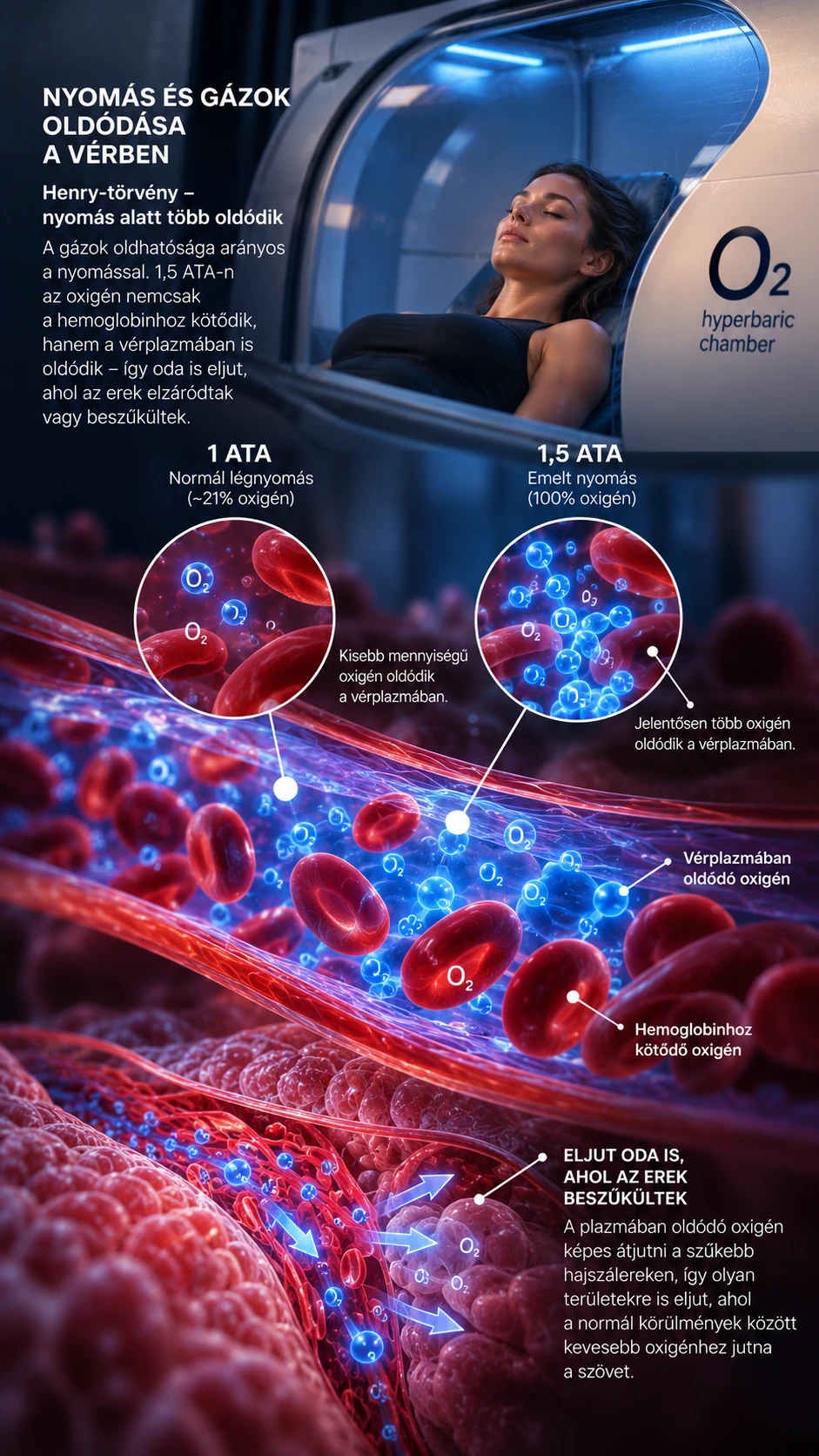
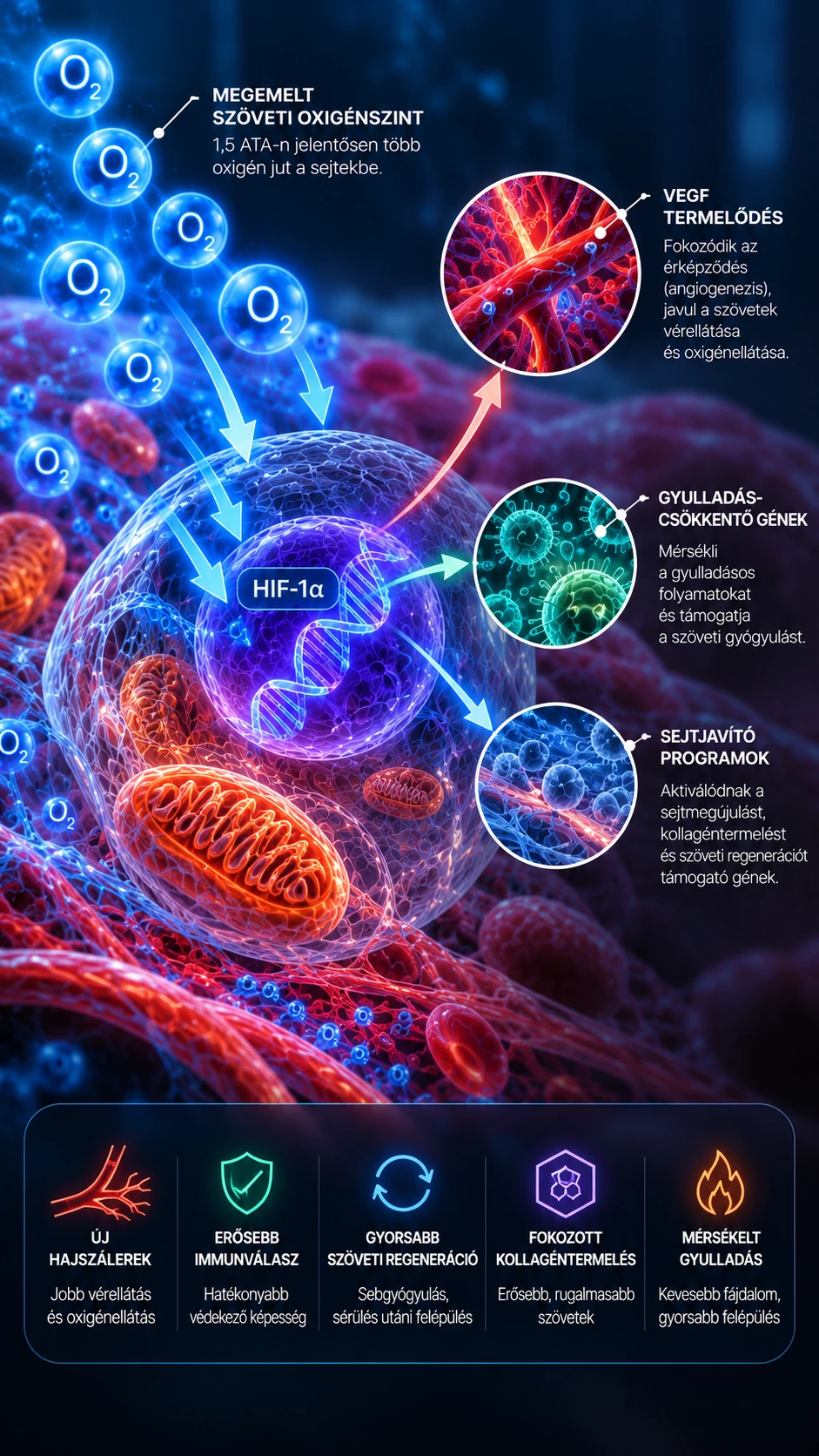
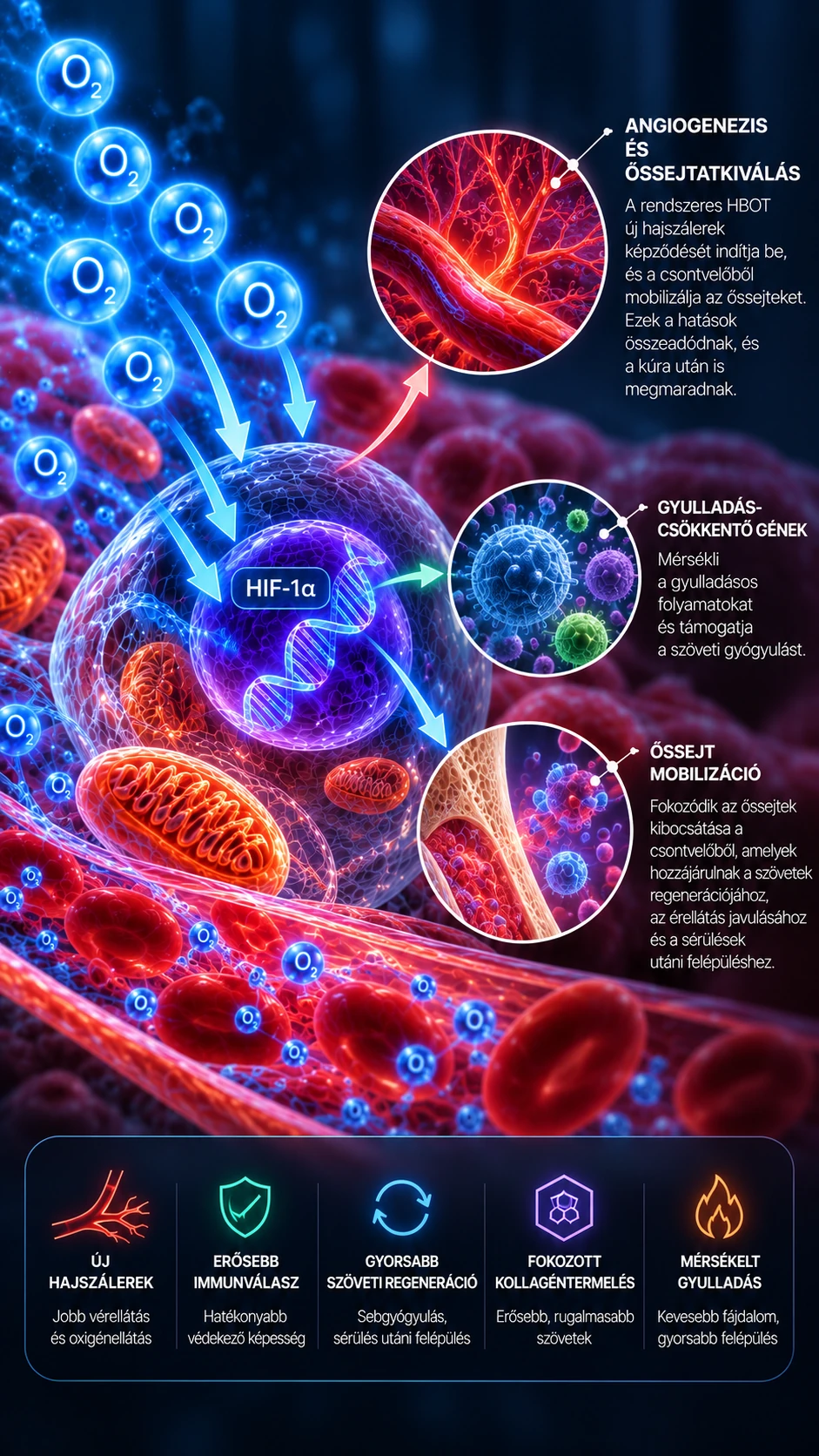
At normal atmospheric pressure of 1.0 ATA, oxygen is carried exclusively by haemoglobin. At 1.5 ATA, it also physically dissolves in the blood plasma, reaching areas haemoglobin cannot. Tissues receive two to three times as much oxygen, initiating new vessel formation, stem-cell activation and anti-inflammatory gene expression.
1,5ATA — the optimal mild HBOT pressure range
60′Active treatment time within an 80-minute session
~3×More dissolved oxygen in the tissues
1.0 ATA or 1.5 ATA — what is the difference?
Normal air · 1.0 ATA100%Baseline tissue oxygen level
mHBOT · 1.5 ATA · FrostFit chamber~200–300%Increase in tissue oxygen levels
New oxygen pathways at 1.5 ATA
- Physical dissolution in blood plasma, independently of haemoglobin
- Reaches tissues not supplied by blocked capillaries
- Direct oxygen supply to the brain and spinal cord
- Improved oxygen supply to bone marrow and cartilage
Source: Thom SR, 2011 · Harch PG, 2015 · Efrati S, 2020
80 minutes — what happens when?
- 10′
Pressure increases: 1.0 → 1.5 ATA
Swallowing or yawning equalises the mild pressure in your ears. Tissues begin taking up the increased oxygen supply.
- 30′
Early treatment phase
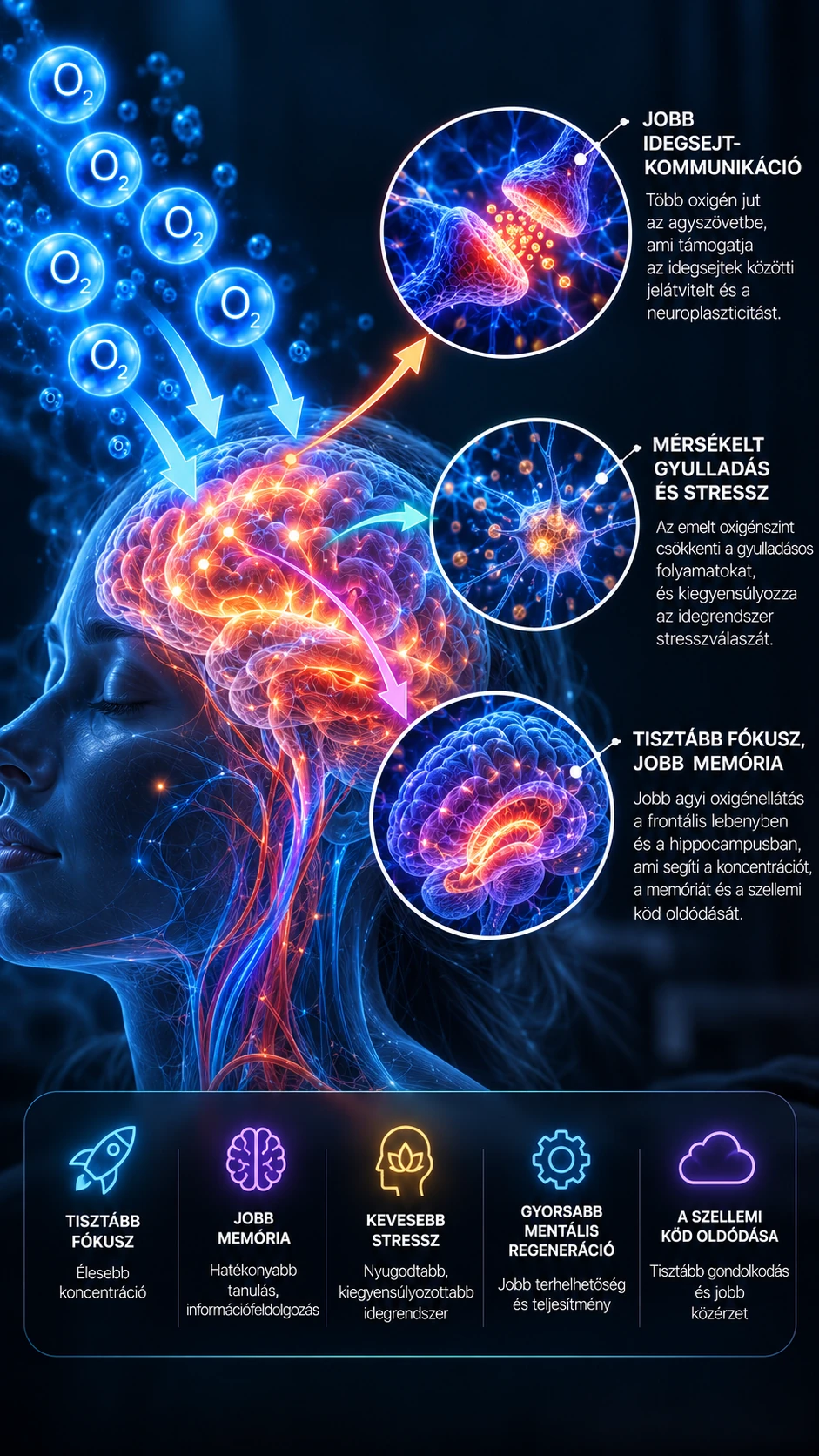
Plasma oxygen levels rise and the brain and muscles begin using the extra oxygen. Many people feel calmer here: thoughts slow down and the body relaxes.
- 70′
Peak therapeutic phase
Changes in gene expression, anti-inflammatory processes, mitochondrial activation and peak brain oxygen levels occur. Stem-cell mobilisation also begins during this phase.
- 80′
Pressure decreases: 1.5 → 1.0 ATA
A gradual return without discomfort. Tissue oxygen levels slowly normalise, while the activated processes — reducing inflammation and repairing cells — continue for hours.
Six reasons to choose it
After 1–3 sessionsMental clarity
Higher brain oxygen levels improve synaptic function and reduce brain inflammation. For mental fog, post-COVID symptoms and burnout, this is one of the most extensively documented natural interventions.
48 hoursFaster recovery
Oxygen-rich tissues heal two to three times faster. Increased ATP production provides cellular energy, giving athletes shorter rest periods and a quicker return to training.
After 2–5 sessionsBetter sleep quality
Reduced brain inflammation and parasympathetic activation increase deep sleep. Regular guests most often say: “I finally wake up rested.”
After a full seriesSystemic inflammation reduction
It inhibits inflammatory signalling through NF-κB and reduces inflammatory cytokines such as TNF-α and IL-1β. Clinical effects have been documented in persistent inflammatory conditions.
After 5–10 sessionsCell renewal and stem-cell activation
Stem cells mobilised from bone marrow migrate to damaged tissues, while new blood vessels improve supply to oxygen-deprived areas over the long term. This drives the lasting anti-ageing effect.
During a treatment seriesStronger immune system
Higher oxygen levels increase white blood cells' bacteria-killing activity and phagocyte function. Immunomodulatory effects have been documented during stressful periods and recovery after illness.